

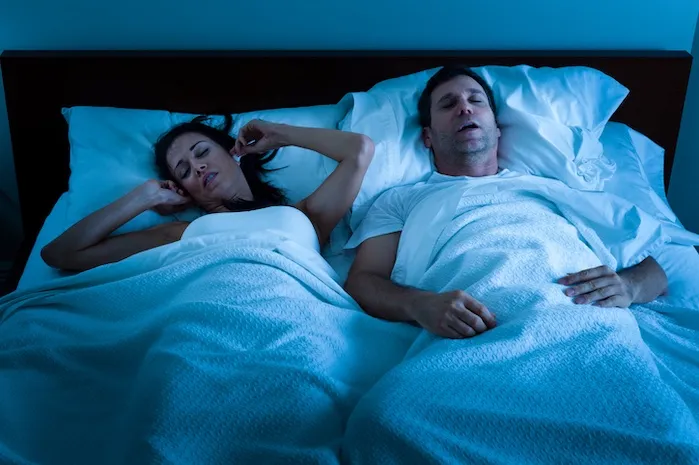
You wake up tired. Your partner says you snore like a chainsaw. And your jaw feels sore for no reason. You might think these are separate problems. But your Flossmoor dentist sees them differently. They often point to one underlying issue: sleep apnea. Here’s what you should know about the connection between your sleep and your smile.

What Is Sleep Apnea?
Sleep apnea is a condition where your breathing stops and starts during sleep. The most common type is obstructive sleep apnea. That means your throat muscles relax too much and block your airway. Your brain wakes you up just enough to start breathing again. You may not remember these wake-ups, but they ruin your sleep quality.
Left untreated, sleep apnea raises your risk for high blood pressure, heart disease, stroke, and daytime accidents. Dentists are often the first healthcare providers to spot sleep apnea. Here’s what we look for in your mouth.
1. Worn-Down Teeth
Do you wake up with flat, shiny, or chipped teeth? That is a classic sign of teeth grinding. Your brain is fighting to open your airway, so your jaw muscles clench and grind. Grinding wears down enamel quickly. It can cause damage, loose teeth, and even jaw pain. Many patients think they just have a “bad habit.” But in many cases, grinding is actually your body trying to breathe.
2. A Scalloped Tongue
Look at the sides of your tongue. Do you see wavy, scalloped edges? That happens when your tongue is too large for your mouth. Or when it presses against your teeth because your airway is narrow. A scalloped tongue is a common but often overlooked clue. If we see it during your exam, we’ll start asking about your sleep.
3. Dry Mouth or Sore Throat in the Morning
If you sleep with your mouth open to get more air, you’ll wake up parched. Your throat may feel raw or scratchy. Dry mouth also raises your risk for cavities. Saliva washes away food and bacteria. Without it, decay and gum disease happen faster.
Why a Dentist Should Be Part of Your Sleep Team
At The Center For Dental Excellence, we do not diagnose sleep apnea. But we do screen for it. We ask every patient about their sleep quality, snoring, and morning headaches.
If we see warning signs, we refer you to a sleep specialist for a proper diagnosis. But we don’t stop there. We can also provide oral appliance therapy. This is a custom-fitted mouthpiece that holds your jaw forward during sleep. It keeps your airway open so you can breathe normally.
For many patients with mild to moderate sleep apnea, an oral appliance works just as well as a CPAP machine. And it’s quieter, more comfortable, and easier to travel with. No mask, no hose, no hassle.
What to Do If You Recognize These Signs
If you have any of these symptoms, start with a conversation with your dentist:
- You snore loudly every night.
- Someone told you that you stop breathing during sleep.
- You wake up gasping or choking.
- You are always tired even after a full night of sleep.
- You have morning headaches or jaw pain.
- You wake up with a dry mouth or sore throat.
Call our office at 708-627-5998. We will do a thorough exam, check for grinding, worn enamel, and tongue scalloping. We’ll ask you about your sleep. And we’ll help you figure out the next right step.
Get Better Sleep Today
Your mouth holds more clues than you think. Worn teeth, a scalloped tongue, and dry mouth are not just minor annoyances. They can be your body yelling for help during sleep. At The Center For Dental Excellence, we take your sleep as seriously as your smile. Because good sleep and good oral health go hand in hand.
If you live in Flossmoor, Homewood, or anywhere nearby, give us a call. We will take a look, listen to your concerns, and start helping you sleep better.
